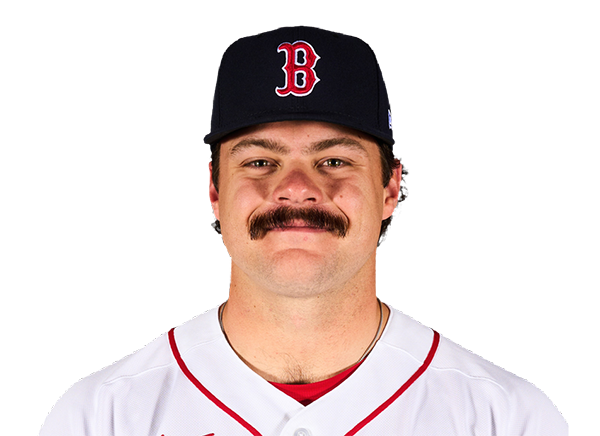
Mason Miller Cy Young Odds 2026: Can a Closer Actually Win?
Mason Miller has top 2026 NL Cy Young odds at +1500. We break down the math on whether there's actual betting value on MLB's most dominant closer.
Mason Miller Cy Young Odds 2026: Can a Closer Actually Win?
Mason Miller has top 2026 NL Cy Young odds among relievers, sitting at +1500 behind only four starting pitchers. That’s not a typo. A closer—a guy who throws 70 innings if he’s lucky—has shorter odds than Shohei Ohtani, Jacob Misiorowski, and Sandy Alcantara. The question sharp bettors need to answer: is this a market inefficiency worth exploiting, or a sucker bet dressed up in gaudy early-season numbers?
The answer requires understanding exactly what it would take for a reliever to win this award in the modern game—and whether Miller’s current dominance is sustainable enough to justify the implied probability.
Current NL Cy Young Market
The futures market has priced Miller as a legitimate contender, which itself is noteworthy. Books don’t typically give relievers this much respect unless the betting public is creating action that needs to be managed, or the numbers are so absurd they can’t be ignored.
Miller’s numbers qualify as absurd. Through mid-April:
- 0.00 ERA, 0.35 WHIP
- 8-for-8 in save opportunities (MLB leader)
- 27 strikeouts in 11⅓ innings
- 38 batters faced, 4 baserunners allowed
- 71.1% strikeout rate
That strikeout rate is the number that jumps off the page. Only 25 starting pitchers have more total strikeouts than Miller—and they’ve thrown five to six times as many innings. He’s not just getting outs; he’s making hitters look helpless.
Odds Block
Note: Cy Young futures odds shown are from market consensus as of April 20, 2026. Check bet105 for current lines and reduced juice on MLB futures.
| Player | 2026 NL Cy Young Odds |
|---|---|
| Paul Skenes, Pirates | +260 |
| Yoshinobu Yamamoto, Dodgers | +380 |
| Cristopher Sánchez, Phillies | +550 |
| Chris Sale, Braves | +950 |
| Mason Miller, Padres | +1500 |
The Historical Problem for Closers
Here’s where the sharp analysis has to override the hype. No reliever has won a Cy Young since Eric Gagne in 2003. That’s over two decades of starters dominating an award that theoretically goes to the best pitcher, regardless of role.
The reason is simple math that Cy Young voters have internalized: workload matters. An ace starter throws roughly 200 innings. An elite closer maxes out around 70-75 innings. Even if the closer’s rate stats are significantly better, the starter accumulates more total value by virtue of volume.
Recent examples illustrate this clearly:
- 2025: Aroldis Chapman posted a 1.17 ERA, 0.70 WHIP, 85 strikeouts in 61⅓ innings with 3.6 WAR. Finished seventh.
- 2024: Emmanuel Clase had a 0.61 ERA, 0.66 WHIP, 66 strikeouts in 74⅓ innings with 4.4 WAR. Finished third.
Clase’s 2024 season is particularly instructive. A sub-0.65 ERA with elite peripherals and 4.4 WAR—numbers that would win many Cy Young races if posted by a starter—still couldn’t crack the top two. The voting bloc has effectively decided that relievers need to be exponentially better in rate stats to overcome the innings gap.
What Miller Would Need: Running the Numbers
To find betting value, we need to model what a Cy Young-winning closer season actually looks like in 2026. Here’s a theoretical line that might—might—get there:
- 70 IP, 0.60 ERA, 0.70 WHIP
- 50 saves in 52 opportunities
- 124 strikeouts, 12 walks
- 5.6 WAR
That’s an absurdly dominant season. For context, it would require Miller to maintain a strikeout rate above 40% (his current 71% pace won’t hold, but 40-45% is conceivable), walk virtually nobody, and convert saves at a 96%+ clip while appearing in enough high-leverage situations to accumulate that workload.
Even then, he’d need the starting pitcher field to underperform. If someone posts a 2021 Corbin Burnes-type season (2.43 ERA, 0.94 WHIP, 234 K in 167 IP, 5.3 WAR), Miller would have a case but not a lock. If someone goes full peak Scherzer or deGrom? Miller finishes third at best.
The Sharp Angle: Where’s the Value?
At +1500, the implied probability on Miller is roughly 6.25%. The question for EV betting purposes: what’s his actual probability of winning?
Let’s break it down:
Probability Miller maintains elite performance: His stuff is legitimate—we’re talking about one of the most electric arms in baseball. A 1.50 ERA or lower with a sub-0.80 WHIP over 65-70 innings? Call it 25-30% likely.
Probability that performance is good enough to win: This is where it gets tricky. Even with those numbers, he needs the starter field to have no clear dominant performer. Looking at the top of the odds board—Skenes, Yamamoto, Sánchez, Sale—all are legitimate aces who could run away with it. Probability that none of them (or any other starter) posts a clearly superior season? Maybe 15-20%.
Probability voters actually reward the reliever: The historical precedent isn’t encouraging. Even with a case, Miller needs voters to break a 20+ year pattern. Call it 50-60% if the numbers are there.
Multiplying these out: 0.275 × 0.175 × 0.55 = roughly 2.6% true probability.
At +1500 (6.25% implied), you’re paying for more than double his actual win probability. That’s negative expected value.
The Contrarian Argument
Here’s where a sharp bettor might push back on the above analysis:
- The strikeout rate is real. Miller’s stuff isn’t a mirage. His fastball-slider combination is generating whiffs at a rate we rarely see. If he maintains even 50% of his current dominance, he’ll have a historically great closer season.
- Narrative matters in voting. If Miller is sitting at 45 saves with a 0.50 ERA in September while the starter field is muddled, the “best pitcher in baseball” narrative could take hold.
- The market might move. If you believe Miller has even a 4-5% chance, there could be closing line value if his odds shorten to +800 or +600 by August.
That last point is interesting for bettors who think in terms of CLV rather than outright wins. You don’t need Miller to win the Cy Young—you just need his odds to improve enough to cash out or hedge profitably.
Bet Recommendation
There’s no play here at +1500. The historical headwinds are too strong, and the implied probability is too generous relative to realistic win odds.
However, this is a line worth monitoring. If Miller’s odds drift to +2500 or higher after a rough patch (which all relievers have), and his underlying stuff remains elite, the math could flip. Value betting on futures often means buying low after short-term noise, not chasing hot streaks.
For now, file this under “fun to watch, not fun to bet.”
Frequently Asked Questions
Can a closer realistically win the Cy Young in 2026?
It’s possible but highly unlikely. No reliever has won since 2003, and voting patterns strongly favor starters due to workload advantages. A closer would need historically dominant rate stats AND a weak starter field to have a real chance. The market’s +1500 odds on Miller imply about 6% probability, which likely overstates his actual chances.
What would Mason Miller need to do to win NL Cy Young?
Based on recent voting patterns, Miller would likely need something approaching: 70 innings, sub-0.75 ERA, sub-0.75 WHIP, 50+ saves, 100+ strikeouts, and 5+ WAR. Even then, he’d need no starter to post a dominant season. It’s a narrow path requiring both personal excellence and external circumstances breaking his way.
Is Mason Miller’s +1500 Cy Young odds good value?
Not at current prices. When you factor in the historical voting bias against relievers, the probability of a starter running away with the award, and regression from Miller’s unsustainable early-season pace, his true win probability is likely closer to 2-3%. That makes +1500 a negative EV bet. Watch for better prices if his odds drift higher later in the season.