Unlock Value in Automated Markets
Discover how to leverage discrepancies in sportsbook automation to secure profit regardless of the outcome.
Bet Now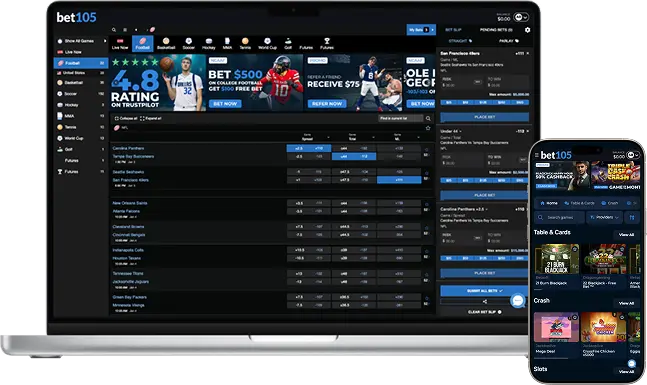
How Two-Way Moneyline Arbitrage Actually Works
Two-way moneyline arbitrage guarantees profit by covering both sides of a binary outcome at mispriced odds, but its simplicity masks execution fragility, detection risk, and structural limits that sharp bettors must manage.
Why Two-Way Arbitrage Still Matters to Sharp Bettors
Two-way moneyline arbitrage is often dismissed as “basic,” yet it remains the most conceptually pure form of arbitrage betting. It requires no assumptions about correlation, no derivatives, and no probabilistic modeling once execution is complete.
For sharp bettors, its value is not educational. It is diagnostic. Two-way arbitrage reveals how sportsbooks react to pricing pressure, how automation behaves under stress, and how execution constraints surface in the cleanest possible environment.
If a platform cannot support clean two-way arbitrage, more complex structures will fail faster.
What is Two-Way Moneyline Arbitrage?
Two-way moneyline arbitrage exists when two sportsbooks post opposing prices on the same event such that betting both sides produces a guaranteed profit regardless of the outcome.
There are exactly two outcomes. Each wager directly covers one of them. Once both bets are accepted at the quoted odds, outcome variance is eliminated.
This structure is the benchmark against which all other arbitrage forms are measured. Click to learn about three way arbitrage.
Conceptual Structure of Two-Way Arbitrage
Unlike synthetic or derivative-based structures, two-way arbitrage does not rely on market relationships. It relies purely on price discrepancy.
↘
Guaranteed Return
↗
Event Outcome B ── Bet at Book Y (Price 2)
The structure succeeds only if both prices remain available long enough for execution.
Why Two-Way Arbitrage Is Structurally Clean but Operationally Fragile
Mathematically, two-way arbitrage is flawless. Operationally, it is unforgiving. Every requirement must be met precisely: correct stake sizing, successful bet acceptance, and stable pricing during execution.
There is no buffer. A rejected stake or price change on either side collapses the structure immediately.
Two-way arbitrage fails not because the logic is wrong, but because markets move faster than execution.
Execution as the Dominant Risk
Execution risk dominates all other considerations in two-way moneyline arbitrage. Because both sides must be placed at specific prices, sequencing and timing are critical.
Sharp bettors often prioritize the more fragile leg first, but this introduces exposure if the second leg moves or is rejected. Automation has compressed execution windows, making hesitation costly.
Two-way arbitrage breaks when execution latency exceeds price stability.
How Two-Way Arbitrage Fails in Live Execution
Two-way moneyline arbitrage most often fails not because the pricing logic is wrong, but because execution unfolds under real-time market pressure. In live environments, even small delays between legs can materially change exposure.
A common failure sequence begins when the first leg is accepted at an off-market price, immediately signaling imbalance to the sportsbook. Automated systems may respond by moving the opposing line, reducing limits, or suspending the market altogether. When the second leg is then attempted, the price may no longer exist or the stake may be rejected.
This leaves the bettor temporarily exposed on a single side, often at the exact moment when volatility is highest. While experienced bettors plan for this risk, it cannot be eliminated entirely. It can only be managed through sequencing, platform selection, and conservative stake sizing.
Two-way arbitrage breaks down when market reaction speed outpaces execution speed, turning a theoretically neutral position into unintended directional exposure. Learn more about live arbitrage vs pre-match arbitrage here.
Execution Sensitivity by Arbitrage Type
Relative execution sensitivity
Two-way structures demand near-perfect execution timing.
Visibility and Detection Dynamics
Two-way moneyline arbitrage is the most visible arbitrage structure. Bets are mirrored, directional, and price-sensitive, making behavioral patterns easy to identify over time.
Repeatedly capturing off-market moneylines on both sides signals pricing-based behavior with little ambiguity. There is no camouflage provided by derivatives or correlation noise.
Visibility is not a flaw. It is a tradeoff for structural certainty.
Automation and Moneyline Markets
Moneyline markets are among the most heavily automated and closely monitored. Algorithms respond quickly to imbalances, especially when sharp volume appears.
Automation reduces tolerance for hesitation. Prices move faster, limits adjust dynamically, and markets suspend more frequently around key events.
Two-way arbitrage still exists, but automation compresses it into shorter, more precise windows.
Decision Thresholds Sharp Bettors Actually Use
Sharp bettors do not evaluate two-way arbitrage opportunities in isolation. They apply decision thresholds that determine whether a structure is worth executing under current conditions.
One key threshold is margin size. As automation accelerates price movement, smaller arbitrage percentages provide less buffer against execution failure. When the pricing gap narrows below a workable threshold, many professionals shift away from two-way structures in favor of synthetic alternatives.
Liquidity is another decisive factor. Thin markets increase the likelihood that one leg will move or be limited after the first bet is placed. When liquidity drops below a level that supports stable execution on both sides, two-way arbitrage becomes structurally inferior despite its mathematical certainty.
Execution conditions also matter. If platform behavior becomes unpredictable or rejection rates increase, sharp bettors often reduce reliance on direct moneyline arbitrage and preserve capital for environments where execution risk is lower.
Two-way arbitrage is deployed only when pricing, liquidity, and execution thresholds align. When any one of these deteriorates, professionals adjust structure rather than forcing volume.
When two-way arbitrage no longer meets execution or margin thresholds, sharp bettors often transition toward expected value betting, accepting variance in exchange for scalability.
Conditions That Support Two-Way Arbitrage
| Condition | Impact on Two-Way Arbitrage | Why It Matters |
|---|---|---|
| Wide price discrepancy | Positive | Creates buffer against small execution delays |
| High liquidity | Positive | Reduces rejection and partial fills |
| Predictable platform behavior | Positive | Allows consistent sequencing decisions |
| Rapid automation response | Negative | Shortens arbitrage lifespan |
Why Two-Way Arbitrage Is Hard to Scale
Scaling two-way arbitrage is difficult because its visibility increases faster than its capacity. As volume grows, detection risk rises disproportionately.
Additionally, moneyline markets tend to tighten quickly as limits, automation, and pricing controls converge on obvious discrepancies.
Two-way arbitrage is better suited for precision than for sustained throughput.
How Sharp Bettors Actually Use Two-Way Arbitrage
Professional bettors rarely rely on two-way moneyline arbitrage as a primary engine. Instead, it is used selectively under favorable conditions and as a diagnostic tool.
It tests platform behavior, execution reliability, and pricing discipline. When two-way opportunities disappear, it often signals broader tightening across markets.
Two-way arbitrage informs strategy even when it is not actively deployed. In practice, capital often shifts toward cross-market arbitrage, where totals, props, and alternate lines are priced independently and create structural gaps that extend beyond simple moneyline discrepancies.
Two-way arbitrage is often associated with pure market inefficiencies, but it is important to distinguish this from promotional arbitrage. Pure market arbitrage arises when two sportsbooks independently post conflicting prices on the same outcome, allowing a bettor to lock in profit without relying on bonuses or incentives. Promotional arbitrage, by contrast, leverages sign-up offers, free bets, or enhanced odds to create a hedged position across platforms. While both approaches can produce risk-contained returns, pure market arbitrage depends on structural pricing divergence, whereas promotional arbitrage depends on temporary marketing mechanics that may carry rollover requirements, limits, or account scrutiny. Learn more about promotional arbitrage vs pure market arbitrage.
Where bet105 Fits
Many arbitrage sportsbooks restrict or discourage direct arbitrage structures. In contrast, bet105 is designed to support pricing-based execution, including low vig betting and +EV betting strategies.
This allows sharp bettors to focus on execution quality rather than platform avoidance.
Frequently Asked Questions
What is two-way moneyline arbitrage?
It involves betting both sides of a binary outcome at mispriced odds to guarantee a fixed return.
Is two-way arbitrage risk-free?
Outcome risk is removed, but execution and platform risk remain.
Why is two-way arbitrage highly visible?
Because bets are mirrored and price-sensitive, making patterns easy to detect.
Does automation eliminate two-way arbitrage?
No, but it shortens opportunity windows and increases execution demands.
Why do sharp bettors still use two-way moneyline arbitrage?
Sharp bettors use two-way moneyline arbitrage for precision execution, platform diagnostics, and selective profit capture when pricing gaps are wide and execution conditions are stable.
Why does bet105 support two-way arbitrage?
Because bet105 is structured for pricing-based strategies rather than recreational-only models.