Unlock Value in Automated Markets
Discover how to leverage discrepancies in sportsbook automation to secure profit regardless of the outcome.
Bet Now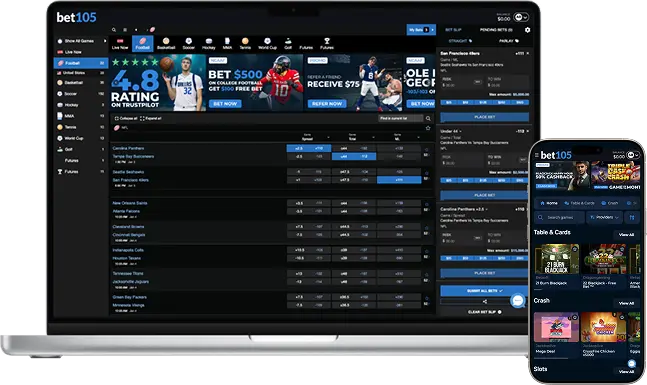
How Promotional Arbitrage Differs From Pure Market Arbitrage
Promotional arbitrage and pure market arbitrage differ fundamentally in edge source, execution durability, and scalability, making them suitable for very different types of betting operations.
Why This Distinction Matters
Promotional arbitrage and pure market arbitrage are often grouped together because both can produce guaranteed or near-guaranteed outcomes. In practice, they rely on entirely different mechanisms and behave very differently once scaled.
Promotional arbitrage depends on sportsbook incentives such as bonuses, free bets, or insurance offers. Pure market arbitrage depends on pricing discrepancies created by decentralized market structures.
Understanding the difference is critical for bettors who care about repeatability rather than short-term extraction in order to be successful with arbitrage betting.
What Promotional Arbitrage Is
Promotional arbitrage involves using sportsbook bonuses or incentives to create a guaranteed or near-guaranteed return regardless of event outcome. Common examples include free bets, bet-and-get offers, or profit boosts.
The edge does not come from market pricing, but from converting promotional value into cash through hedged positions. Once the promotion is consumed, the opportunity disappears.
Promotional arbitrage is finite by design.
What Pure Market Arbitrage Is
Pure market arbitrage exploits mispriced odds across sportsbooks by covering all possible outcomes of an event using standard wagers. The profit is generated entirely from pricing inefficiencies rather than incentives.
Because markets are decentralized and update asynchronously, these discrepancies appear naturally and repeatedly. Once execution is complete, outcome variance is eliminated.
Pure market arbitrage is structural, not promotional.
Structural Comparison of Arbitrage Types
├─ Bonus-dependent
├─ One-time extraction
└─ Edge expiresPure Market Arbitrage
├─ Price-dependent
├─ Repeatable structure
└─ Edge regenerates
The source of the edge determines whether the strategy can be repeated over time.
How the Edge Is Created
Promotional arbitrage creates edge artificially by injecting value through incentives. The sportsbook knowingly offers negative expected value to acquire or reactivate users.
Pure market arbitrage creates edge organically through disagreement between pricing models, update speed, and risk tolerance across sportsbooks.
One is subsidized; the other is emergent.
Risk Model Alignment vs Incentive Design
Promotional arbitrage and pure market arbitrage interact with sportsbook risk models in fundamentally different ways. Promotional arbitrage is anticipated behavior, explicitly budgeted as part of customer acquisition and retention strategies.
Pure market arbitrage, by contrast, interacts directly with the sportsbook’s core pricing engine. It signals disagreement with the bookmaker’s probability estimates rather than participation in a marketing funnel.
This distinction matters because sportsbooks tolerate promotional leakage by design, while pricing-based arbitrage feeds back into risk and line management decisions. One is an accepted cost, the other is a pricing signal.
Execution Risk and Operational Complexity
Execution risk in promotional arbitrage is typically low. Bets are often placed pre-match, with wide execution windows and minimal price sensitivity.
Pure market arbitrage carries higher execution risk. Prices can move, markets can suspend, and incomplete execution can leave temporary exposure.
Promotional arbitrage simplifies execution at the cost of longevity.
Operational Friction and Hidden Costs
Promotional arbitrage often appears operationally simple, but it carries hidden costs that compound over time. Qualification rules, rollover requirements, and bet restrictions add friction that reduces effective returns.
Managing multiple promotions also introduces overhead: tracking offer terms, timing bets precisely, and ensuring compliance with wagering conditions. These processes are difficult to automate and scale.
Pure market arbitrage has higher execution risk, but lower administrative friction. Once infrastructure and workflows are established, marginal operational cost per bet is significantly lower.
Execution Risk Comparison
Relative execution risk
Execution complexity increases when the edge is pricing-based.
Capital Efficiency and Scalability
Promotional arbitrage is capital efficient in the short term because bonuses amplify returns on limited bankroll. However, volume is capped by offer availability and account eligibility.
Pure market arbitrage scales with infrastructure rather than incentives. While margins are thinner, opportunities regenerate continuously across markets.
Scalability favors structure over subsidy.
Detection and Longevity
Promotional arbitrage is highly visible. Using incentives in a systematic, hedged manner often triggers account restrictions once promotional value is exhausted.
Pure market arbitrage is less immediately visible because it mirrors normal betting behavior when executed carefully. Longevity depends on execution patterns rather than participation in offers.
One strategy is tolerated briefly; the other is evaluated over time.
Regulatory and Jurisdictional Sensitivity
Promotional arbitrage availability is highly sensitive to jurisdictional rules and regulatory posture. Promotions can be altered, withdrawn, or restricted with little notice as compliance frameworks evolve.
In many regions, sportsbooks are required to structure offers conservatively, reducing both frequency and value. This makes promotional arbitrage inconsistent across markets and time periods.
Pure market arbitrage is less dependent on regulatory incentives. As long as sportsbooks operate independently and price markets separately, structural discrepancies continue to emerge regardless of promotional policy.
Decision Thresholds Sharp Bettors Apply
Sharp bettors view promotional arbitrage as opportunistic rather than foundational. It is used when available but not relied upon for sustained returns.
Pure market arbitrage is evaluated alongside ev betting as part of a broader pricing-based operation.
The choice reflects long-term objectives, not short-term convenience.
How These Strategies Fit Inside a Professional Betting Stack
Professional bettors rarely treat promotional and pure market arbitrage as mutually exclusive. Each serves a different role within a broader betting system.
Promotional arbitrage is commonly used as an onboarding or capital-boosting tool. It provides short-term, low-risk gains that can be redeployed into pricing-based strategies.
Pure market arbitrage functions as a structural component of long-term operations. It offers predictable, low-variance returns and acts as a stabilizing force alongside higher-variance expected value strategies.
Promotional vs Pure Market Arbitrage
| Dimension | Promotional Arbitrage | Pure Market Arbitrage |
|---|---|---|
| Edge source | Incentives | Pricing discrepancies |
| Repeatability | Limited | Ongoing |
| Execution risk | Low | Moderate |
| Scalability | Capped | Infrastructure-dependent |
Promotional and pure arbitrage are both affected by structure type and timing environment, but in different ways. Two-way arbitrage is structurally simpler and more resilient, especially pre-match, while three-way and cross market arbitrage increase complexity and sensitivity to limits, partial fills, and bet rejection. Pre-match markets reduce timing pressure and make both promotional and pure setups more stable. Live markets compress execution windows, making pure arbitrage latency-driven and promotional arbitrage even more fragile due to bonus caps and tighter acceptance controls. As structure complexity increases and markets shift from pre-match to live, promotional arbitrage becomes disproportionately more sensitive than pure pricing-based arbitrage.
Where bet105 Fits
Many arbitrage sportsbooks rely heavily on promotional mechanics to attract volume while restricting pricing-based strategies. bet105 is structured to support pricing-based strategies, including low vig betting and +EV betting strategies.
This makes bet105 naturally aligned with pure market arbitrage rather than short-lived promotional extraction.
Frequently Asked Questions
What is promotional arbitrage in sports betting?
Promotional arbitrage is a betting strategy that uses sportsbook incentives such as free bets, bet-and-get offers, or profit boosts to create guaranteed or near-guaranteed returns. The edge comes from converting promotional value into cash through hedged wagers rather than exploiting market pricing. Once the promotion is consumed, the opportunity no longer exists.
What is pure market arbitrage?
Pure market arbitrage exploits pricing discrepancies between sportsbooks by covering all possible outcomes using standard wagers. The profit is generated entirely from misaligned odds rather than bonuses or incentives. Because sportsbooks price markets independently, these discrepancies can reappear continuously.
How does promotional arbitrage differ from pure market arbitrage?
Promotional arbitrage relies on sportsbook incentives that are intentionally subsidized and finite, while pure market arbitrage relies on decentralized pricing behavior that regenerates over time. Promotional arbitrage is constrained by offer availability, whereas pure market arbitrage is constrained by execution and infrastructure. The two strategies behave differently once scaled.
Is promotional arbitrage profitable long term?
Promotional arbitrage can be profitable in the short term but does not scale indefinitely. Profitability is limited by promotion frequency, wagering requirements, and account eligibility. Over time, opportunities diminish as offers are exhausted or restricted.
Is pure market arbitrage scalable?
Pure market arbitrage is more scalable because it does not depend on incentives and can be repeated across markets and events. Scalability depends on execution discipline, liquidity, and capital efficiency rather than offer availability. Infrastructure quality becomes the limiting factor.
Which strategy has higher execution risk?
Pure market arbitrage has higher execution risk because prices can move, markets can suspend, and incomplete execution can create temporary exposure. Promotional arbitrage typically offers wider execution windows and lower price sensitivity. The tradeoff is longevity versus simplicity.
Why do sportsbooks tolerate promotional arbitrage but restrict market arbitrage?
Sportsbooks tolerate promotional arbitrage because it is budgeted as part of customer acquisition and retention costs. Pure market arbitrage directly challenges pricing models and exposes inefficiencies. This difference explains why incentives are finite while pricing-based strategies are evaluated structurally.
Can promotional arbitrage and pure market arbitrage be used together?
Yes. Many professional bettors use promotional arbitrage opportunistically while relying on pure market arbitrage as a structural component of their operation. Promotional gains are often redeployed into pricing-based strategies. The strategies serve different roles within a broader system.
Why is bet105 better aligned with pure market arbitrage?
bet105 is aligned with pure market arbitrage because it prioritizes pricing efficiency and execution consistency rather than incentive-driven churn. By supporting pricing-based strategies without relying on promotional mechanics, bet105 allows arbitrage to function as a repeatable process rather than a one-time extraction.