Unlock Value in Automated Markets
Discover how to leverage discrepancies in sportsbook automation to secure profit regardless of the outcome.
Bet Now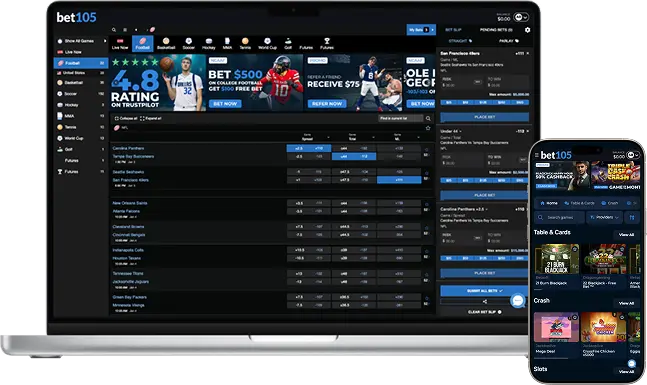
Why Arbitrage Betting Sportsbook Account Limits Are Behavioral
Sportsbook account limits are triggered by repeatable behavioral patterns that conflict with a platform’s risk model, not by betting volume, isolated profitability, or short-term winning streaks.
The Persistent Myth of Volume-Based Limiting
One of the most common misconceptions in arbitrage betting is that sportsbooks limit accounts simply because a bettor wagers large amounts or wins too consistently. In reality, raw betting volume is rarely the decisive factor.
Most sportsbooks already manage exposure through line movement, market limits, and pricing adjustments. High-volume recreational bettors exist across nearly every platform and often remain unrestricted for years.
What creates friction is not size, but structure. When betting activity follows patterns that are difficult to model, hedge, or price efficiently, sportsbooks are forced to intervene at the account level. Learn more about how sportsbook detect arbitrage activity.
How Sportsbooks Actually Classify Risk
Modern sportsbook risk systems do not ask whether an account is profitable. They ask whether an account behaves in a way that the platform expects and can reliably absorb.
Recreational sportsbooks are built around behavioral assumptions that include inconsistency, emotion-driven wagering, and a wide distribution of bet types. When an account repeatedly violates those assumptions, the system flags misalignment.
This explains why two bettors with similar profit profiles can receive entirely different treatment, because classification is behavioral, not outcome-driven. Click to learn the difference between soft vs sharp sportsbooks.
Account Limiting as a Classification Process
| Trigger Dimension | Volume-Based Risk Control | Behavioral Account Limiting |
|---|---|---|
| Primary Signal | Exposure size | Execution patterns |
| Time Horizon | Single market | Multi-event behavior |
| Management Method | Line movement | Stake caps / delays |
| Outcome Sensitivity | Outcome-agnostic | Structure-sensitive |
| Typical Bettor Type | High-volume recreational | Pricing-based bettor |
This sequence reflects how limits are applied in practice. Sportsbooks rarely jump directly to restriction. Instead, they accumulate behavioral evidence until continued exposure becomes operationally inefficient.
Importantly, this process is not punitive. It is a form of risk containment designed to protect pricing models from sustained structural pressure.
Primary Behavioral Triggers That Lead to Limits
Timing Precision Relative to Line Movement
Accounts that consistently place bets immediately after price updates reveal external price awareness. While fast reactions alone are not problematic, repeated post-move execution across markets indicates systematic monitoring.
This signal accelerates classification when combined with other efficiency-oriented behaviors.
Consistent Price Outperformance
Repeatedly securing prices that outperform the closing line signals market literacy rather than opinion-based wagering. Closing line value itself is not punished, but sustained outperformance without variance becomes diagnostic.
Mechanical Staking Patterns
Perfectly proportional staking or rigid wager sizing reduces natural behavioral noise. Recreational bettors vary stakes unpredictably. Mechanical consistency suggests pre-defined execution rules.
Behavioral Limiting vs Volume-Based Exposure Management
Volume-based exposure management and behavioral limiting solve different problems.
When a sportsbook faces high exposure on a specific outcome, it manages that risk by moving lines or adjusting market limits. This process is mechanical and outcome-agnostic.
Behavioral limiting occurs when an account’s overall execution pattern introduces structural risk that cannot be solved through pricing alone. In these cases, the account itself becomes the control variable.
Limiting Decision Flow
This flow highlights why volume alone rarely leads to restriction. Behavioral misalignment is the gating condition.
Secondary Signals That Reinforce Limiting Decisions
Primary triggers rarely act in isolation. Sportsbooks use secondary signals to confirm classification confidence.
Market Breadth Compression
Accounts that operate exclusively in a narrow set of liquid markets reduce behavioral variance. Over time, this concentration strengthens professional classification.
Absence of Negative Expected Value Bets
Recreational bettors routinely place inefficient wagers. Accounts that systematically avoid these options appear optimized for efficiency rather than entertainment.
Liquidity-Sensitive Capital Deployment
Dynamically scaling stakes based on available limits or market depth indicates capital efficiency awareness uncommon among casual bettors.
Signal Strength by Limiting Trigger
Volume ranks lowest because it is predictable and easily hedged, while timing precision ranks highest because it directly exposes pricing interaction behavior. Learn why bet timing matters more than bet size.
Second-Order Effects of Account Limiting
Partial limits often introduce more execution risk than full restrictions. Reduced stake caps can break arbitrage math, increase slippage, and force inefficient capital allocation.
Many bettors fail after being partially limited not because they lose access, but because execution quality degrades while strategy assumptions remain unchanged.
This dynamic is rarely discussed but has significant implications for long-term viability.
Why Limiting Is Incremental by Design
Sportsbooks prefer gradual friction over abrupt bans. Incremental limits reduce exposure while preserving user engagement and minimizing reputational risk.
This approach also allows risk systems to reassess classification as new data emerges. Early limits are often reversible if behavior changes.
What Account Limiting Triggers Mean for Execution Strategy
Account limits are not a moral judgment. They are usually a signal of structural misalignment between a pricing-based strategy and a platform built around recreational flow. The same misalignment often shows up through slower acceptance speeds or occasional bet rejection, especially during periods of volatility.
Bettors can attempt to adjust behavior, accept reduced efficiency, or operate on platforms designed for pricing-based execution. The optimal path depends on strategic priorities, not concealment tactics.
In practice, platform selection matters more than behavioral camouflage, because consistent execution capacity is more valuable than temporary workarounds.
Why bet105 Does Not Apply Behavioral Limits
bet105 is an arbitrage sportsbook built around pricing-based strategies rather than recreational engagement optimization. The platform’s risk model anticipates sharp execution and incorporates it into pricing and liquidity decisions.
As a result, behaviors that trigger limits elsewhere do not inherently conflict with bet105’s operational objectives.
This alignment removes the need for behavioral suppression mechanisms and allows pricing-literate bettors to operate without artificial constraints.
For broader context, review how arbitrage betting platforms differ structurally from traditional sportsbooks, and how they compare to EV betting environments.
As a crypto sportsbook built around low vig betting, bet105 pairs fast, efficient capital movement with tighter margin structures that leave more room for pricing-based strategies to operate.
Frequently Asked Questions
What triggers sportsbook account limits in arbitrage sports betting?
Sportsbook account limits in arbitrage sports betting are triggered by repeatable behavioral patterns such as timing precision, price outperformance, and mechanical staking. These signals indicate pricing-based strategies rather than recreational betting behavior.
Are sportsbook limits based on betting volume?
Sportsbook limits are not primarily based on betting volume. High-volume recreational bettors often remain unrestricted if their behavior aligns with the platform’s risk expectations.
Does winning consistently cause sportsbook account limits?
Winning alone does not cause sportsbook account limits. Limits occur when winning is paired with identifiable behavioral signals that suggest systematic pricing exploitation.
Can sportsbook limiting occur with small bet sizes?
Sportsbook limiting can occur even with small bet sizes if behavioral patterns remain consistent over time. Classification is driven by structure, not absolute stake amounts.
Why do some sportsbooks limit pricing-based bettors?
Some sportsbooks limit pricing-based bettors because their business models prioritize engagement and margin stability. Pricing-based execution introduces risk profiles those platforms are not designed to absorb.
How does bet105 handle account limiting for arbitrage sports betting?
bet105 does not rely on behavioral limiting for arbitrage sports betting. The platform is designed to accommodate pricing-based strategies through aligned risk modeling and infrastructure decisions.