Arbitrage betting continues to exist despite automation because sportsbooks remain decentralized and configure their pricing systems differently. As long as operators apply distinct risk models, exposure thresholds, and business priorities, both true and synthetic arbitrage will remain viable. True arbitrage thrives where execution is clean and pricing gaps are explicit, while synthetic arbitrage persists where structural correlations create flexibility within modern betting environments.
Advanced Betting Strategies
Unlock Value in Automated Markets
Discover how to leverage discrepancies in sportsbook automation to secure profit regardless of the outcome.
Bet Now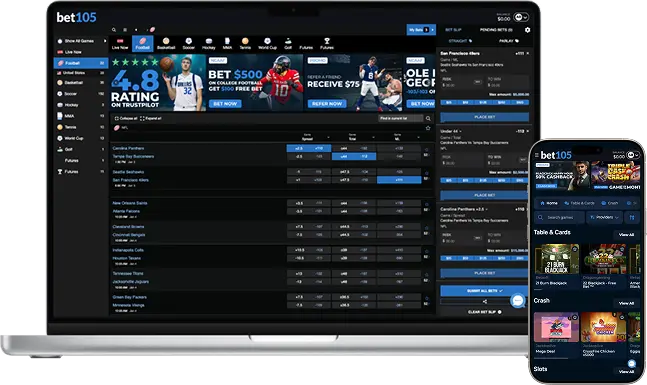
How True and Synthetic Arbitrage Create Different Risk Profiles
True arbitrage locks in profit by covering all outcomes directly, while synthetic arbitrage recreates a similar payoff using correlated markets rather than explicit outcome coverage.
Why the Distinction Between True and Synthetic Arbitrage Matters
Arbitrage betting is often treated as a single strategy, but the structure of an arbitrage trade determines how it behaves under real-world conditions. True arbitrage and synthetic arbitrage both aim to neutralize outcome risk, yet they do so through fundamentally different mechanisms.
For sharp bettors, the distinction matters because execution risk, detection patterns, and scalability differ meaningfully between the two. Understanding structure is more important than the label applied to the trade.
What True Arbitrage Is
True arbitrage is the most direct form of arbitrage sports betting. It occurs when a bettor places wagers on all possible outcomes of an event at mispriced odds across different sportsbooks, guaranteeing a fixed return regardless of the result.
Once all legs are successfully placed, the profit is known immediately. There is no reliance on probability estimates, correlations, or market behavior after execution.
True arbitrage depends entirely on price discrepancies between sportsbooks and the bettor’s ability to execute every leg cleanly. Click to learn how arbitrage betting opportunities arrive to be.
Failure Modes in True Arbitrage
True arbitrage most often fails not because the pricing logic is wrong, but because execution conditions change mid-process. Partial fills, rejected stakes, or rapid price movement between legs can turn a guaranteed structure into unintended exposure.
Sequencing matters. Betting the more fragile leg second introduces additional risk, especially in volatile or low-liquidity markets. Market suspensions, stake acceptance asymmetry, and dynamic limits further complicate execution.
True arbitrage breaks down when execution latency exceeds the lifespan of the price discrepancy.
What Synthetic Arbitrage Is
Synthetic arbitrage recreates a similar payoff profile without covering every outcome of a single market directly. Instead, it combines correlated bets across different markets to approximate a risk-neutral position.
These structures often involve spreads, totals, alternate lines, or derivatives that move together mathematically. The arbitrage is considered synthetic because the hedge is constructed indirectly rather than through explicit outcome coverage.
Synthetic arbitrage reduces outcome exposure, but its effectiveness depends on how reliably correlated markets behave.
Failure Modes in Synthetic Arbitrage
Synthetic arbitrage does not fail through leg rejection as often as true arbitrage. Instead, it fails when assumed correlations weaken or behave asymmetrically. This is especially common in live betting environments where pricing updates lag unevenly.
Hidden vig embedded in derivative markets can erode thin edges, turning what appears to be a neutral structure into a marginal expected value position. Rounding, alternate line spacing, and market-specific limits all contribute to subtle edge decay.
Synthetic arbitrage breaks down when correlation assumptions replace empirical price relationships.
Structural Differences Between the Two Approaches
Although both strategies are pricing-based, their structures create different operational characteristics.
- True arbitrage covers all outcomes directly within the same event.
- Synthetic arbitrage relies on mathematical relationships between separate markets.
These differences affect execution reliability, visibility to sportsbooks, and long-term usability.
Execution Risk and Reliability
True arbitrage concentrates risk in execution. If one leg is rejected, delayed, or repriced, the structure can break down entirely. Timing and sequencing are critical because every outcome must be covered explicitly.
Synthetic arbitrage shifts some risk away from execution timing and toward correlation accuracy. The bets may be easier to place, but the structure assumes related markets move as expected.
True arbitrage is execution-sensitive, while synthetic arbitrage is correlation-sensitive.
Detection and Platform Interaction
From a sportsbook perspective, true arbitrage is easier to detect. Repeatedly capturing off-market prices on mirrored outcomes clearly signals pricing-based behavior.
Synthetic arbitrage often appears more organic because it involves different markets and does not present as a direct hedge. This can reduce friction on platforms sensitive to explicit arbitrage patterns.
Structure choice is often dictated by platform tolerance rather than theoretical efficiency.
Decision Logic Used by Sharp Bettors
Sharp bettors select arbitrage structures based on conditions rather than preference. When execution latency is low and liquidity is sufficient, true arbitrage offers cleaner certainty. When markets are volatile or platforms restrict mirrored behavior, synthetic structures provide flexibility.
As a general heuristic, true arbitrage is preferred when pricing gaps are wide and stable, while synthetic arbitrage becomes more attractive as execution risk increases.
Structure selection should change before stake size when conditions deteriorate.
How Low Vig Impacts True and Synthetic Arbitrage
Low vig betting structures directly enhance both true and synthetic arbitrage by tightening the margin that must be overcome to create profit. In true arbitrage, reduced overround lowers the break-even threshold, making smaller cross-book discrepancies sufficient to lock in guaranteed returns. In synthetic arbitrage, lower margin environments improve the efficiency of correlated constructions, allowing alternate lines or derivative markets to align more favorably. When pricing friction is reduced, both strategies require less distortion to become viable, increasing frequency and improving capital efficiency.
How Sportsbooks Perceive Each Strategy
True arbitrage is easier for sportsbooks to identify because it involves mirrored outcomes within the same event at off-market prices. Repeated patterns of this behavior clearly signal pricing-based betting.
Synthetic arbitrage often appears more organic because it involves different markets rather than direct hedges. This can reduce friction on platforms that monitor explicit arbitrage activity.
In practice, platform tolerance often determines which structure is preferred.
When Sharp Bettors Use Each Method
Experienced bettors treat true and synthetic arbitrage as complementary tools rather than competing strategies.
- True arbitrage is favored when pricing gaps are clear and execution conditions are stable.
- Synthetic arbitrage is used when correlations offer smoother execution or lower visibility.
The choice depends on market structure, liquidity, and platform behavior at the time of execution.
True vs Synthetic Arbitrage Comparison
| Characteristic | True Arbitrage | Synthetic Arbitrage |
|---|---|---|
| Outcome coverage | Direct and complete | Indirect via correlation |
| Profit certainty | Fixed at execution | Bounded, correlation-dependent |
| Primary risk | Execution failure | Correlation breakdown |
| Visibility to sportsbooks | Higher | Lower |
Visual Breakdown of Arbitrage Structure Risk
The chart below shows how execution and correlation risk are distributed between the two arbitrage structures.
True arbitrage execution risk
High
True arbitrage correlation risk
Low
Synthetic arbitrage execution risk
Medium
Synthetic arbitrage correlation risk
High
How Professional Bettors Combine Both Structures
Professional betting operations rarely rely on a single arbitrage structure. True arbitrage is often used as a volatility suppressor during stable market phases, while synthetic arbitrage maintains flow when direct pricing gaps become harder to execute.
By rotating structures based on market phase, liquidity, and platform behavior, professionals preserve capital velocity without forcing execution under suboptimal conditions.
Arbitrage is most effective when treated as a system component rather than a standalone tactic.
Where bet105 Fits Into Both Structures
Many arbitrage sportsbooks are optimized for recreational betting, which constrains pricing-based strategies. In contrast, bet105 prides itself on being a friendly crypto sportsbook structured to support both true and synthetic arbitrage without penalizing systematic execution.
This allows sharp bettors to choose the arbitrage structure that best fits market conditions rather than adapting strategy to platform limitations.
Why Both Forms of Arbitrage Will Continue to Exist
Frequently Asked Questions
What is true arbitrage in sports betting?
True arbitrage involves betting all possible outcomes at mispriced odds to guarantee a fixed profit.
What is synthetic arbitrage?
Synthetic arbitrage recreates a similar payoff using correlated markets rather than direct outcome coverage.
Is synthetic arbitrage risk-free?
Synthetic arbitrage reduces outcome exposure but depends on correlations holding as expected.
Which arbitrage method is better?
Neither method is universally better, as each suits different market and execution conditions.
Do sportsbooks detect true arbitrage more easily?
True arbitrage is more visible because it involves mirrored outcomes within the same event.
Can bettors use both methods?
Sharp bettors often use both true and synthetic arbitrage depending on opportunity structure.
Why does bet105 support arbitrage betting?
bet105 supports arbitrage betting because its platform is designed for pricing-based strategies.