How Arbitrage Betting Opportunities Occur in Modern Sports Betting Markets
Arbitrage betting opportunities exist because markets are not perfectly efficient. Differences in pricing across sportsbooks, timing delays in line movement, and structural variations between markets create temporary gaps that can be exploited for risk-free or near risk-free returns.
True arbitrage covers every outcome of the same event across different sportsbooks to lock in a guaranteed profit based purely on price discrepancies. Synthetic arbitrage creates a similar low-risk position by combining related markets or alternate lines, but it relies on structural relationships and can introduce execution or grading risk. Learn more about
true arbitrage vs synthetic arbitrage.
Why Price Discrepancies Still Exist in Modern Markets
It is easy to assume that modern sportsbook markets should be nearly perfectly efficient. With real-time data feeds, automated pricing tools, and constant information flow, many bettors expect odds to converge instantly across platforms. In theory, that assumption makes sense. In practice, arbitrage betting exists because sportsbook markets are fragmented by design.
Each sportsbook runs its own pricing engine. Odds are shaped by internal exposure, customer behavior, risk tolerance, and business objectives. Even when multiple books receive the same information at the same time, they do not interpret or act on it identically. Price discrepancies exist because sportsbooks are not trying to mirror one another. They are optimizing for different outcomes.
In modern betting markets, efficiency does not mean uniform pricing, rather, it means continuous adjustment within a decentralized system, which is explained in detail in our arbitrage betting complete guide.
Despite advanced automation, arbitrage still exists because automation does not eliminate decentralization. Sportsbooks may use automated pricing tools, shared data feeds, and algorithmic risk management, but they configure those systems differently. Reaction thresholds, exposure tolerances, margin targets, and customer segmentation rules vary by operator. Automation accelerates price movement, yet it does not standardize decision-making. As long as sportsbooks prioritize different risk outcomes and business models, automated systems will continue to produce temporary pricing divergence rather than perfect alignment. So as a sharp bettor, arbitrage betting opportunities will always exist, despite automation.
Decentralization as the Root Cause of Arbitrage
Sports betting markets are decentralized. There is no central authority enforcing price alignment, and sportsbooks are under no obligation to stay synchronized with competitors. Each operator decides how aggressively to move lines, how quickly to respond to pressure, and how much exposure it is willing to carry.
This independence creates timing gaps. One sportsbook may adjust immediately after new information appears, while another delays movement to manage risk or protect recreational users. These short-lived disagreements are where arbitrage opportunities form.
Arbitrage exists not because sportsbooks are careless, but because decentralization is a core feature of how betting markets function.
How Risk Models and Line Origination Create Divergence
Not all sportsbooks originate their own lines. Some build prices internally, while others rely on third-party oddsmakers or shared feeds. Even when the same source is used, sportsbooks apply different overlays, limits, and adjustments based on internal risk preferences.
Books that prioritize sharp price discovery tend to move quickly and accept early pressure. Others are structured around recreational play and may shade prices, widen margins, or delay movement. These strategic differences lead to persistent pricing gaps across the market.
Key Structural Drivers of Price Discrepancies
Although pricing divergence can appear random, it consistently stems from a small set of structural factors:
- Different risk models and exposure limits
- Uneven reaction speeds to news and sharp action
- Liquidity differences across sportsbooks
- Strategic focus on recreational versus pricing-driven bettors
Understanding these drivers allows arbitrage bettors to anticipate where discrepancies are likely to appear rather than relying on chance.
Liquidity and Market Depth Effects
Liquidity plays a critical role in how prices form and converge. In high-liquidity markets, odds tend to align quickly as volume forces convergence. In lower-liquidity environments, prices move more slowly and unevenly.
This effect is most visible in secondary leagues, niche markets, and early market openers. A relatively small wager can move a line at one sportsbook while leaving others unchanged, allowing price discrepancies to persist longer than expected.
Live Betting and Real-Time Constraints
Live betting introduces additional friction. During in-play markets, sportsbooks must balance speed, accuracy, and risk controls under rapidly changing conditions. Feed latency, suspension rules, and internal safeguards differ materially across platforms.
As a result, live odds often diverge sharply even when the same event is unfolding in real time. These discrepancies reflect operational tradeoffs rather than pricing mistakes.
How Different Market Conditions Create Different Arbitrage Profiles
This table summarizes how market conditions affect stability, frequency, and execution risk for pricing-based bettors.
| Market |
Price stability |
Arb frequency |
Execution risk |
| High-liquidity pre-match |
● High |
● Medium |
● Low |
| Low-liquidity markets |
● Low |
● Medium |
● Medium |
| Live betting |
● Very low |
● High |
● High |
High-liquidity pre-match tends to be the most stable, low-liquidity markets create more uneven pricing, and live betting produces the most frequent gaps with the highest execution complexity.
Visual Breakdown of Price Discrepancy Drivers
The chart below highlights the primary structural reasons sportsbook prices diverge.
Reaction speed differences
35%
Risk model divergence
20%
Reaction speed differences
Reaction speed is the most reliable source of price discrepancies. Sportsbooks receive the same information but react on different timelines, creating brief windows where odds diverge before the market converges.
Liquidity imbalance
Liquidity determines how quickly prices correct. In thin markets, small wagers can move one sportsbook while others remain unchanged, allowing discrepancies to persist longer than in high-volume environments.
Risk model divergence
Different risk tolerances lead sportsbooks to price the same event differently. Some move aggressively to manage exposure, while others accept imbalance longer, creating structural pricing gaps.
Market segmentation
Sportsbooks price markets based on the bettors they serve. Platforms focused on recreational play tolerate off-market prices longer than those optimized for sharp action, making segmentation a consistent source of discrepancies.
Transition to execution strategy
Understanding why price discrepancies form is only half the equation. Turning those discrepancies into reliable profit depends on execution, timing, and choosing platforms that allow pricing-based strategies to operate efficiently.
Where bet105 Fits Into Modern Market Structure
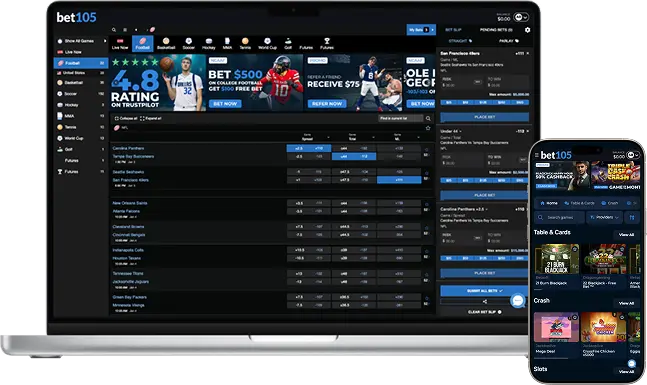
Most sportsbooks are optimized for recreational betting behavior, which influences how they manage pricing gaps and respond to sharp activity. In contrast, bet105 arbitrage sportsbook is structured to support pricing-driven strategies, including low vig betting and +EV betting strategies.
bet105 recognizes that price discrepancies are a natural feature of decentralized markets. Its infrastructure, settlement model, and risk tolerance are aligned with bettors who rely on execution consistency rather than promotional mechanics.
Why Price Discrepancies Will Continue to Exist
Even as automation improves and data becomes more accessible, price discrepancies are unlikely to disappear. As long as sportsbooks remain independent, manage risk differently, and pursue different business objectives, odds will continue to diverge.
Market efficiency does not require identical prices. In sports betting, efficiency and decentralization coexist, and arbitrage naturally emerges between them.
Frequently Asked Questions
Why do price discrepancies exist between sportsbooks?
Price discrepancies exist because sportsbooks operate independently, use different risk models, and update odds at different speeds.
Are price discrepancies sportsbook mistakes?
Price discrepancies are not mistakes but a natural outcome of decentralized markets with different strategic priorities.
Do price discrepancies close quickly?
Some close rapidly, while others persist longer depending on liquidity and how sportsbooks react to new information.
Are price discrepancies more common in certain markets?
They are more common in low-liquidity markets, early openers, and live betting environments.
Why are price discrepancies important for arbitrage betting?
Arbitrage betting relies on price discrepancies to lock in profit without predicting event outcomes.
Why does bet105 support arbitrage betting?
bet105 supports arbitrage betting because its platform is designed to accommodate pricing-based strategies rather than discouraging them.