MLB Home Run Props April 17: Willy Adames, Henderson Value Plays
Free MLB home run picks for April 17 featuring Willy Adames, Gunnar Henderson & Michael Busch. Sharp analysis on HR prop value and closing line edges.
MLB Home Run Props April 17: Willy Adames, Henderson Value Plays
The home run prop market on Friday’s MLB slate presents three spots where the posted odds appear to undervalue actual HR probability. When you’re hunting value in the HR prop market, you need to understand that these bets are inherently high-variance—but when you consistently take +EV spots, the math works in your favor over a large sample. Today’s MLB home run picks for April 17 center on Willy Adames, Gunnar Henderson, and Michael Busch, each facing favorable platoon matchups against pitchers with documented HR vulnerability.
The key question isn’t whether these guys will go yard tonight—it’s whether the implied probability baked into the odds is lower than the actual probability. Let’s break down why sharp bettors should be interested in these three spots.
Market Overview: Where the HR Prop Value Lives
Home run props are one of the few markets where retail sportsbooks consistently offer beatable lines. Why? Because the vig structure on longshot props tends to be less efficient than on spread or total markets. Books know most recreational bettors hammer overs and favorites—they’re not as focused on optimizing HR prop pricing to the decimal.
When modeling HR probability, you’re weighing several factors: batter’s ISO and HR/FB rate, pitcher’s HR/9 and flyball tendency, park factors, weather conditions, and platoon splits. Today’s slate offers three matchups where these factors converge favorably for the hitter, and the market odds don’t fully reflect it.
Independent modeling suggests fair value on Adames sits around +387, Henderson around +406, and Busch around +452. When you’re getting +388, +430, and +520 respectively at retail, that’s where the edge lives.
Friday April 17 HR Prop Odds
Note: Specific bet105 odds were not available at publication time. The following reflects market pricing from major retail books. Always check bet105’s live odds before placing any wager, as our reduced juice model frequently offers better value on prop markets.
—ODDS BLOCK—
| Market | Current Line |
|——–|————-|
| Willy Adames HR | Yes +388 / No (varies) |
| Gunnar Henderson HR | Yes +430 / No (varies) |
| Michael Busch HR | Yes +520 / No (varies) |
—END ODDS BLOCK—
Key Factors: Breaking Down Each Play
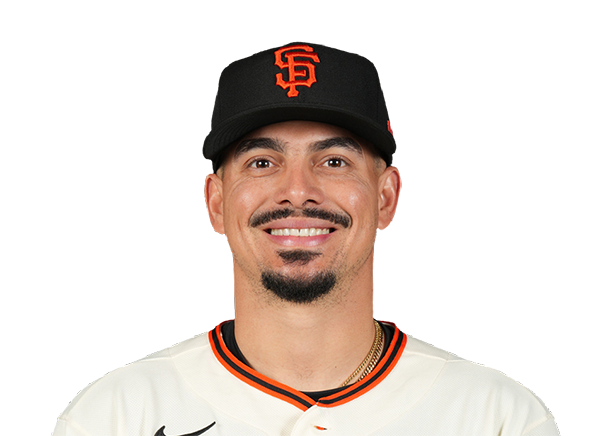
Willy Adames, Giants (+388) vs. Zack Littell
Adames has clubbed 23 of his 33 homers against right-handed pitching dating back to last season, posting a .766 OPS in those matchups. But the real story here is Littell’s home HR problem. Over his last eight home starts, Littell has surrendered 9 home runs—including three multi-HR games. That’s a 1.73 HR/9 rate at home, which is firmly in the “launch pad” category for opposing hitters.
Adames has also been significantly better on the road (.780 OPS, 20 HR in 385 PA) compared to home (.713 OPS). Tonight he’s on the road facing a pitcher who can’t keep the ball in the yard at his own park. The recent form is there too: 2 HR over his last 5 road games.
Fair value modeling puts Adames around +387. Getting +388 means you’re essentially betting at fair odds—not a massive edge, but when you factor in potential CLV if this line moves, it’s a spot worth taking early.
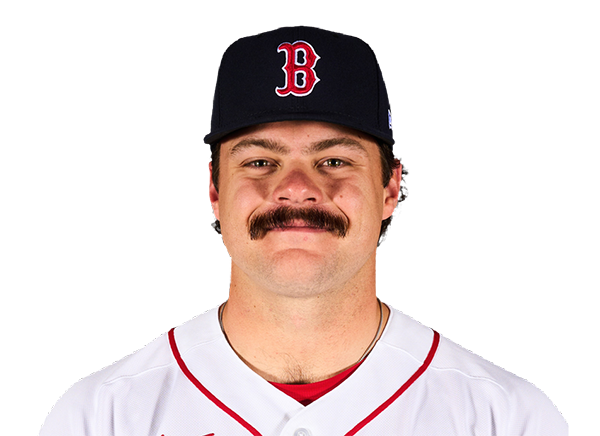
Gunnar Henderson, Orioles (+430) vs. Tanner Bibee
Henderson’s 9 at-bats against Bibee include 4 hits, 1 HR, and a ridiculous 1.444 OPS. Small sample? Absolutely. But it aligns with the broader trend: Henderson mashes righties (.281/.837 OPS) and Bibee has been vulnerable to lefties (.729 OPS against, 18 HR allowed in 475 PA).
Henderson’s road power has been real—10 HR in 359 road PA with a .765 OPS. He’s also running hot, with 3 HR in his last 6 road games. When a hitter is seeing the ball well and has the platoon edge against a pitcher who gives up hard contact to his handedness, you take the plus-money.
The modeled fair line sits around +406. At +430, you’re getting roughly 6% of overlay—solid value for a player of Henderson’s caliber with this matchup profile.
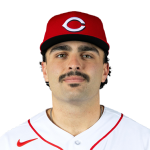
Michael Busch, Cubs (+520) vs. Kodai Senga
This is the highest-variance play of the three, but it’s also where the biggest potential edge exists. Busch is in an ugly slump—.056 over his last 10 games with zero homers in his last 8 home games. That sounds like a reason to fade him, right?
Here’s the contrarian angle: Senga has been getting shelled. A 7.07 ERA over his last 3 starts, and lefties have tattooed him for a .782 OPS with 9 HR in 298 PA. Busch, despite the slump, has hit 33 of his 38 career homers against right-handed pitching with an .868 OPS in those matchups.
The “due” narrative is garbage from an analytical standpoint—each at-bat is independent. But what’s not garbage is that Busch’s underlying batted ball data hasn’t cratered as badly as his results, and he’s facing a pitcher in a vulnerable stretch. HR conditions are favorable today (8/10 HR Index), and the park factors support elevated fly ball distance.
Fair value modeling puts Busch around +452. At +520, you’re getting significant overlay—roughly 15% edge if the model is accurate. That’s the kind of spot sharp bettors look for in the prop market.
Sharp Angle: The CLV Opportunity
Here’s what separates recreational HR prop bettors from sharp ones: understanding that the value isn’t just in the outcome—it’s in the closing line.
If you bet Henderson at +430 and the line closes at +380, you’ve captured closing line value regardless of whether he actually homers. Over thousands of bets, CLV is the most reliable predictor of long-term profitability. The players who consistently beat closing lines are the ones who survive.
These three plays were identified because independent modeling suggests the opening prices undervalue actual HR probability. If that modeling is directionally correct, we should expect to see these lines shorten as sharper money enters the market throughout the day. Getting in early captures that CLV.
For bet105 players specifically: our reduced juice model on props means you’re often paying less vig than the -110/-110 standard, which directly improves your expected value on every wager.
Bet Recommendation
Henderson (+430) is the cleanest play of the three. The matchup history, platoon advantage, and recent form all align, with roughly 6% overlay on the modeled fair price.
Busch (+520) offers the biggest potential edge but requires stomach for variance. If you’re building a HR prop portfolio and tracking results over 100+ bets, this is exactly the type of contrarian spot that shows profit long-term.
Adames (+388) is essentially a fair-odds play. Not a strong recommendation, but not a fade either. If you’re already betting the other two and want a third leg for a same-game parlay, Adames fits.
As always: these are +EV spots, not guarantees. HR props are long-shot bets by nature. Proper bankroll management means sizing these appropriately—typically 0.5-1 unit max.
FAQ
What makes a home run prop bet +EV?
A home run prop becomes +EV (positive expected value) when the implied probability from the odds is lower than the actual probability of the event occurring. For example, +400 odds imply a 20% chance. If your modeling suggests a 22% chance, that’s an 10% edge. Factors that create this edge include platoon advantages, pitcher HR vulnerability, park factors, and weather conditions—all of which the market sometimes underweights.
How do sharp bettors approach MLB player props?
Sharp bettors treat props as a volume game. They’re not trying to hit one big longshot—they’re identifying hundreds of small edges across a season and letting sample size work in their favor. They track closing line value (CLV) religiously, knowing that beating the close predicts long-term profit better than short-term results. They also hunt for soft markets where books are less efficient, and HR props tend to fit that criteria.
Why is closing line value important for prop betting?
Closing line value (CLV) matters because the closing line represents the most efficient price after all information has been incorporated by the market. If you consistently bet at better prices than the close, you’re demonstrating an ability to identify value before the market corrects. Studies have shown that CLV is the single best predictor of long-term betting profitability—more predictive than short-term win rate.